CCC SEMINARY RECTOR BREAKS SILENCE ON ALLEGATIONS, DEFENDS FINANCIAL RECORDS, STUDENTS’ DISCIPLINE
-
by
Kayode Ajala
- No Comments on CCC SEMINARY RECTOR BREAKS SILENCE ON ALLEGATIONS, DEFENDS FINANCIAL RECORDS, STUDENTS’ DISCIPLINE
As institution prepares for Students’ Week, AMSE Kayode Taiwo explains admission policies, fee payments, student levies and infrastructure projects
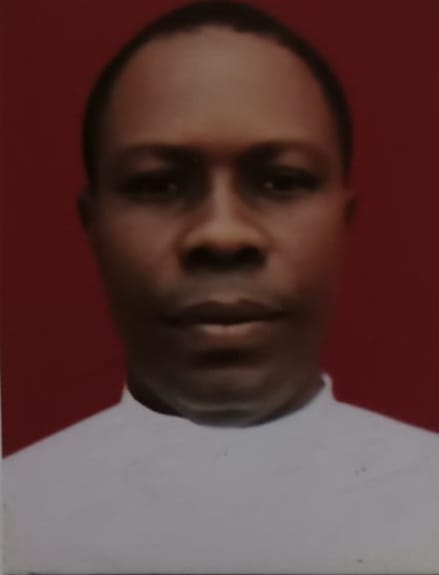
The Rector of the Celestial Church of Christ Theological Seminary, Assistant Most Superior Evangelist Kayode Taiwo, has responded to allegations concerning the administration of the institution, dismissing claims of financial impropriety and explaining the policies governing students’ admission, conduct and financial obligations.
In responses to questions submitted to him, the Rector maintained that school fees are paid directly into the Church’s designated account, while student welfare levies are agreed upon and administered by the students themselves.
He also addressed allegations concerning the handling of thanksgiving offerings, the alleged arbitrary expulsion of students and the management of infrastructural projects.
According to him, the Seminary operates established academic and disciplinary requirements, while expenditure on infrastructural improvements is supported by records and receipts.
The allegations and the Rector’s responses are presented below. His explanations represent his account of the issues raised.
INTERVIEW WITH THE RECTOR
QUESTION: There are allegations that you arbitrarily expelled some students from the Seminary. What is the true position?
RECTOR: Under the present administration, admission into the first year of the Seminary requires applicants to demonstrate a minimum educational qualification, particularly the ability to read and write, as well as evidence of affiliation with a local parish of the Celestial Church of Christ.
For returning students seeking readmission into any class, certain conditions must also be satisfied. These include evidence of meeting the minimum attendance requirements, maintaining good conduct and demonstrating a teachable disposition consistent with the standards expected of prospective ministers of God.
The Seminary is a theological institution established to train individuals for spiritual responsibilities. Consequently, academic discipline, attendance and appropriate priestly conduct are essential requirements.
QUESTION: It has also been alleged that students pay school fees into your personal bank account. How do you respond?
RECTOR: The school fees of all seminarians are paid directly into the Church’s designated bank account.
Other payments relating to study materials and class obligations are handled separately according to the students’ needs and convenience.
For the 2026/2027 academic session, the records of school fee payments have already been submitted to the appropriate Church authority, together with evidence of the transactions.
QUESTION: Another allegation concerns the alleged appropriation of thanksgiving items. What is your response?
RECTOR: There is no case of anyone unlawfully appropriating thanksgiving items in the Seminary.
The Rector is responsible for arranging repairs and maintenance of school equipment. Items intended for worship and religious services are used in the Seminary chapel, while edible items are consumed by those serving within the institution.
That is the arrangement, and there is no basis for suggesting that thanksgiving items are being converted to personal use.
QUESTION: There are also complaints about the imposition of levies on students, including an alleged solar energy levy. What is the position of the administration?
RECTOR: The class levies are agreed contributions made by the students themselves. These funds are managed by the students for their collective welfare.
There has never been any collection for a solar energy project in the Seminary. Anyone claiming to have made such a payment should provide evidence.
There is, however, an established policy requiring students to settle outstanding debts. This is intended to protect the interests of operators of the canteen, bookshop, snacks and drinks businesses, and other vendors operating within the school premises.
Students are also expected to pay for examination materials, including printed question papers and answer scripts, as is applicable in other institutions of higher learning.
QUESTION: What infrastructural improvements have been undertaken under your administration, and how were they financed?
RECTOR: The installation of railings on the first floor and staircases was undertaken with funds from the school.
The purchases of materials for these projects are supported by receipts and other relevant records.
Similarly, the tiling of classrooms was financed from the school purse, following the donation of tiles by the Church Works and Projects Committee, with the approval of the Pastor.
Evidence relating to these expenditures is available upon request.
CCC THEOLOGICAL SEMINARY UNVEILS STUDENTS’ WEEK PROGRAMME, SPOTLIGHTS RESPONSIBLE SOCIAL MEDIA USE
Meanwhile, the Seminary is preparing for its Students’ Week activities, with a one-day seminar scheduled for Monday, 30th November 2026, at 10.00 a.m., on the institution’s campus at Km 53, Lagos–Ibadan Expressway, Ogun State.
The programme, themed “Responsible Use of Social Media: What Is in Your Hand? Using Technology for Good,” will feature Elizabeth Osunsanwo, founder of Podium Kagex.
The seminar will focus on the responsible application of digital technology, an increasingly important subject for theological students and prospective ministers operating in an age of rapidly expanding social media influence.
In the accompanying video, Rector Kayode Taiwo speaks about the forthcoming Students’ Week. The programme details above are confirmed by the promotional material displayed in the recording; his complete spoken remarks have not been transcribed, so no additional statements are attributed to him here.
The programme offers an opportunity to examine how social media can be employed constructively for Christian communication, education and responsible public engagement.
PLEASE REBROADCAST!